Walk into any big box store in November and there is a wall of security cameras and alarm kits, heavily discounted, promising professional protection for a couple of hundred dollars. Some of it is genuinely good. Some of it will disappoint you in ways that only become obvious a year later.
We install professional systems for a living, so treat this with the appropriate scepticism, but we would rather give you an honest comparison than pretend DIY never makes sense. It often does.
What a DIY system actually is
A modern DIY kit is usually a hub, a handful of wireless door and window contacts, a motion sensor, a keypad or app, and often a camera or two. You install it yourself, it connects to your home Wi-Fi, and it sends alerts to your phone. Some brands also offer optional professional monitoring for a monthly fee, which blurs the line usefully.
Where DIY genuinely wins
- Renting. No holes, no contract, and it comes with you. For an apartment or a one year rental, a DIY kit is often the sensible answer.
- Small spaces. A condo with one entry door and a balcony does not need a designed system. Three sensors cover it.
- A tight budget. If the honest choice is a DIY kit or nothing at all, the kit is better than nothing, and we would say so.
- Supplementing something that already exists. Adding a camera at a shed or a sensor on a garage door to an otherwise adequate setup.
- If you enjoy it. Some people happily maintain their own system, update firmware and swap batteries. If that is you, you will do fine.
Where DIY tends to fall short
Nobody is answering the alarm
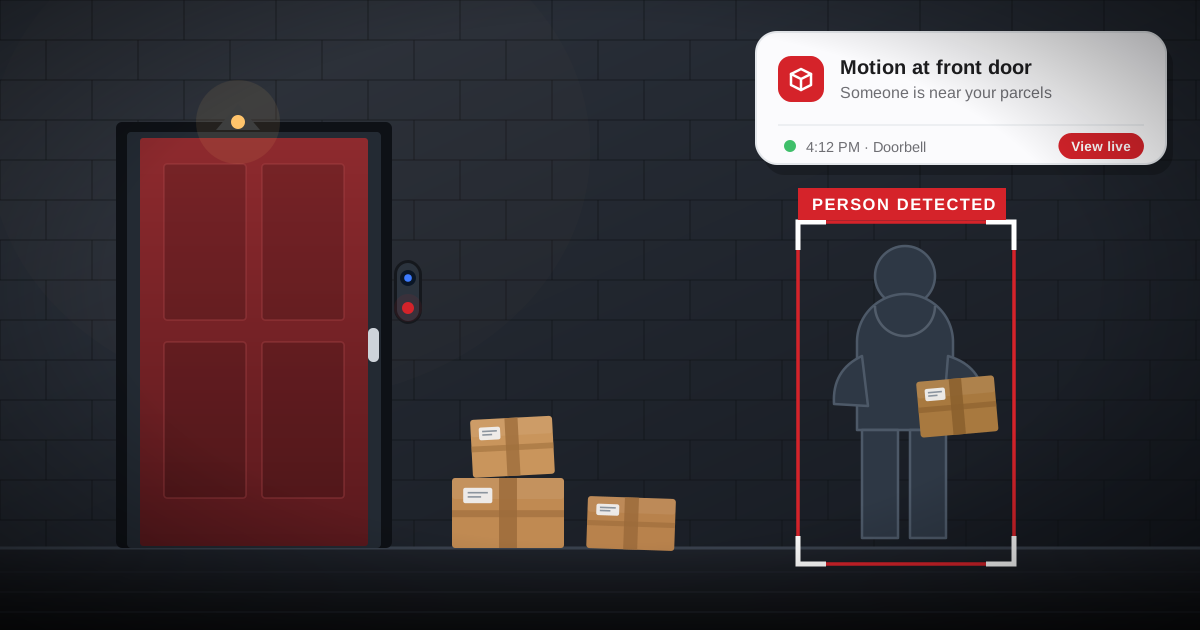
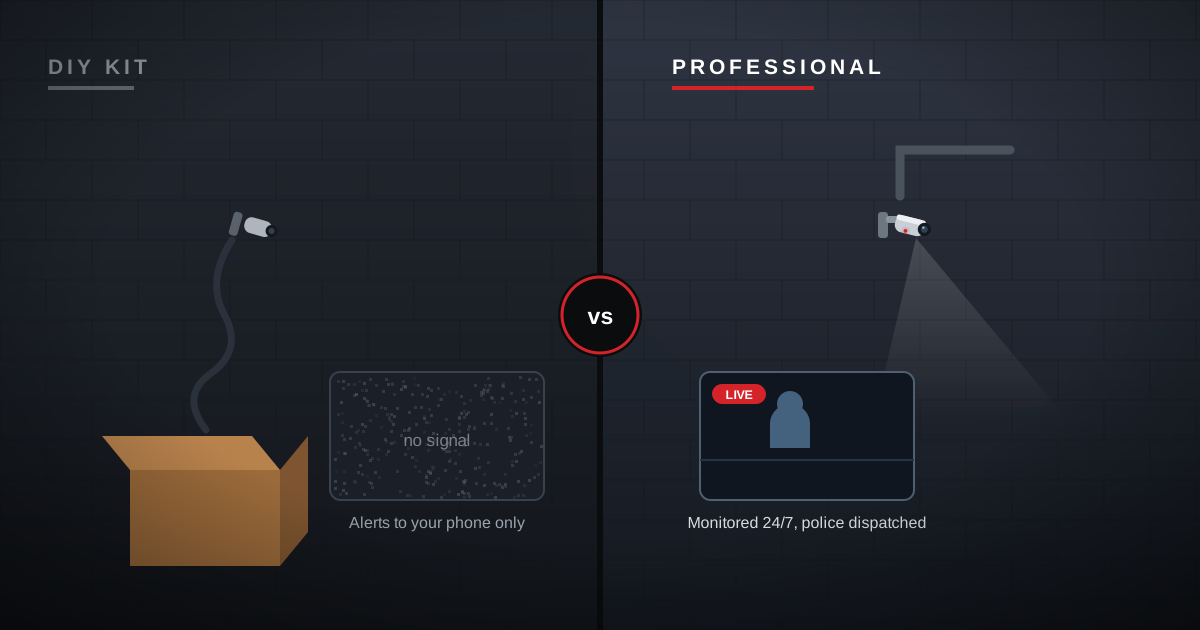
This is the big one. A DIY kit sends a notification to your phone. If your phone is on silent, in a meeting, in a cinema, out of signal, or charging in another room at 3am, the alert is simply missed. A professionally monitored system puts a trained operator at an accredited receiving centre on every signal, who verifies and dispatches police or fire whether or not you noticed. That is the fundamental difference, and it is not a feature you can add with better hardware.
The system was never designed
Most DIY kits get installed where it is easy rather than where it matters. Sensors go on the front and back door, and the basement window that is actually the realistic entry point gets nothing. A technician who has walked a few thousand properties looks at sight lines, grade, fencing, and where somebody could work unseen for two minutes. That design judgement is a large part of what you pay for.
Coverage and reliability in a Canadian winter
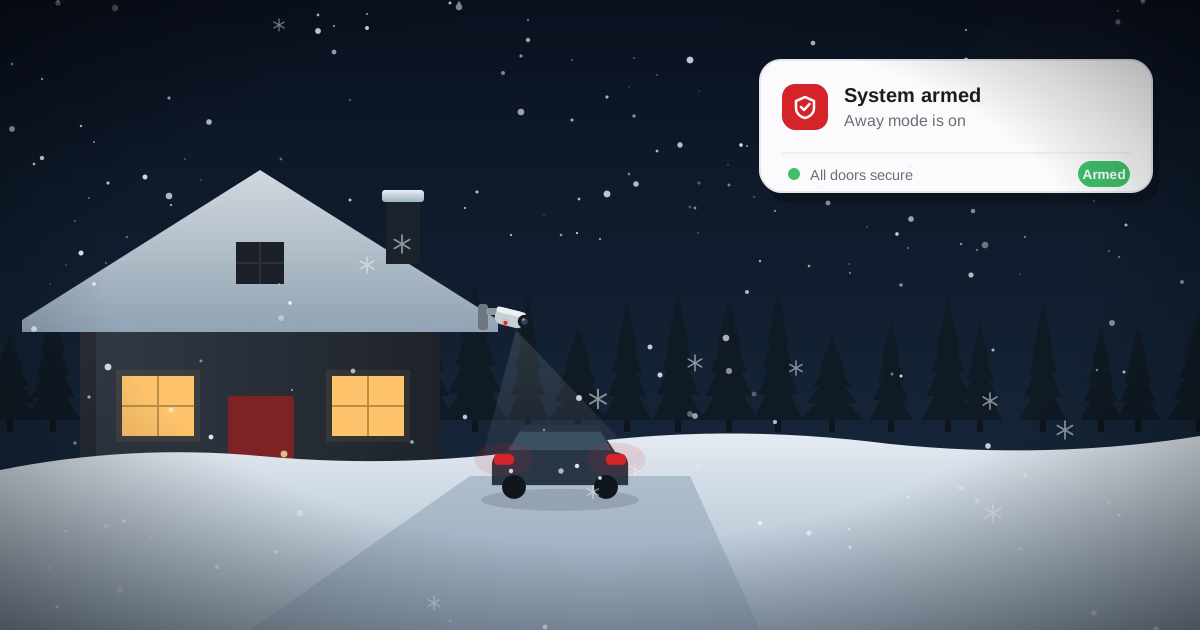
Consumer kit is often rated for a narrower temperature range than professional equipment, and the first hard freeze finds every marginal battery. Wi-Fi range through a brick exterior wall to a detached garage is another common disappointment. Professional panels generally report over cellular with battery backup, so they keep working when the internet and the power do not. Our piece on security systems in a winter power outage goes into that in detail.
False alarms are your problem
Pets, balloons, heating vents and spiders all set off motion sensors. With a monitored system, the station verifies before anyone is dispatched, which keeps you out of municipal false alarm charges. With a DIY system, the siren simply runs until you get home.
The subscriptions add up
The sticker price is rarely the real price. Many consumer cameras need a monthly cloud plan to keep recordings for more than a day or two, charged per camera on some brands. Over five years, four cameras on cloud plans can quietly cost more than a professionally installed system that records locally to equipment you own.
Insurance usually wants monitoring
Most Canadian insurers offer discounts for professionally monitored alarm systems, and they generally want a monitoring certificate to apply it. Self monitored DIY equipment usually does not qualify on its own. Our guide to monitored alarms and home insurance covers what insurers actually recognise.
The honest middle ground
You do not have to pick a side. Plenty of households run a professionally monitored alarm as the backbone, because that is the part that needs to work when nobody is watching, and add their own cameras or smart doorbell on top. Several DIY brands also sell optional professional monitoring, which closes the biggest gap while keeping the lower hardware cost.
What we would avoid is the worst of both: an expensive pile of consumer gear, installed in the wrong places, on four separate apps, that nobody is responsible for maintaining.
About those Black Friday deals
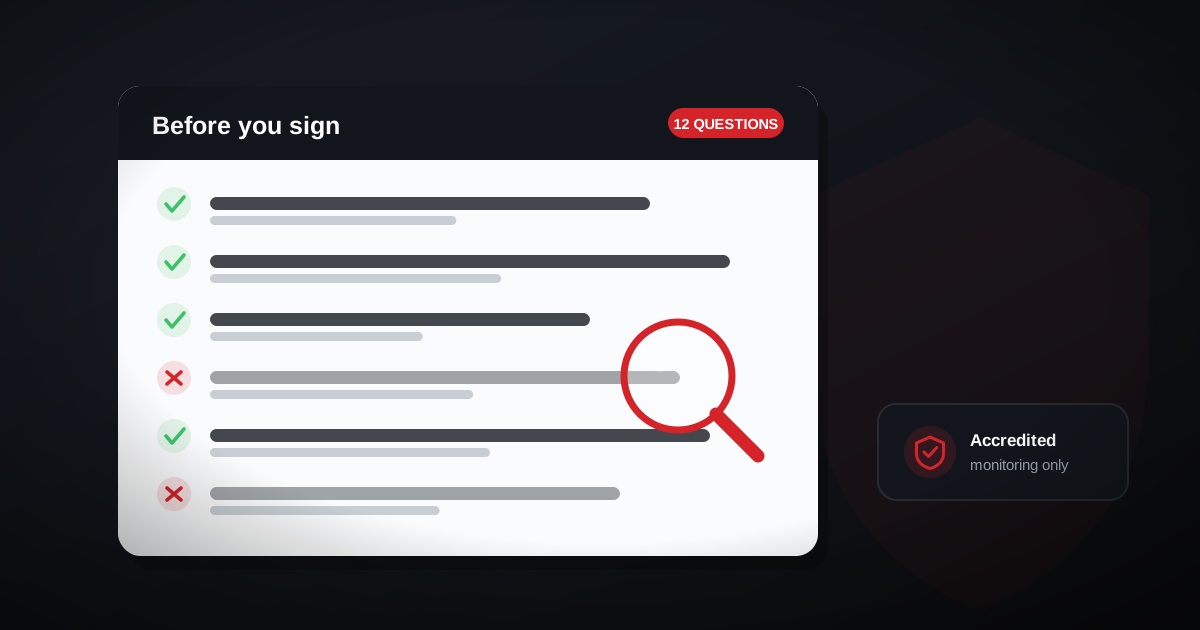
Some are real. A discounted camera from a reputable brand is a discounted camera. Two things to check before you buy. First, what the ongoing cloud storage costs per camera per month, because that is where the money is. Second, whether the deal is actually a long monitoring contract with hardware attached, in which case work out the total over the full term rather than looking at the monthly figure. Our guide to choosing a security company has the questions to ask.
A simple way to decide
Ask what happens at 3am when the alarm goes off and you are asleep, or away, or your phone is dead. If the honest answer is nothing, and you are protecting something you could not easily replace, you want monitoring. If the answer is that a noise and a notification is genuinely enough for your situation, a good DIY kit may be exactly right.
If you are not sure which camp you are in, that is a five minute conversation rather than a sales call, and we are happy to have it.
Common questions
Is a DIY security system good enough?
For a rental, a condo, or a tight budget, a good DIY kit is genuinely useful and much better than nothing. Its main limitation is that alerts go only to your phone, so if you miss the notification nobody responds. For a property you could not easily replace, professional monitoring closes that gap.
What is the main difference between DIY and professionally monitored security?
Response. A DIY system notifies you. A professionally monitored system sends every signal to a trained operator at an accredited receiving centre who verifies it and dispatches police or fire whether or not you saw the alert. The second difference is design: a technician plans coverage around how your specific property could actually be entered.
Do DIY security cameras qualify for a home insurance discount?
Usually not on their own. Most Canadian insurers offer discounts for professionally monitored alarm systems and ask for a monitoring certificate. Self monitored consumer equipment typically does not qualify, though policies differ, so confirm with your broker.
Are cheap security cameras worth buying on Black Friday?
Sometimes. Check two things first: the ongoing cloud storage cost per camera per month, which is where the real expense sits over time, and whether the offer is actually a long monitoring contract with hardware bundled in, in which case compare the total cost across the full term.
Can I combine a DIY camera with a professional alarm system?
Yes, and many households do. A professionally monitored alarm handles intrusion, fire and environmental detection, while your own cameras or smart doorbell add convenience. The setup to avoid is a large amount of consumer equipment spread across several apps with nobody maintaining it.
Quotes and site visits are always free, and always pressure-free.
Get a free quote